The Strategic Value of Minimalist Line Art: Leveraging Mason Jar Floral Designs in Modern Creative Commerce
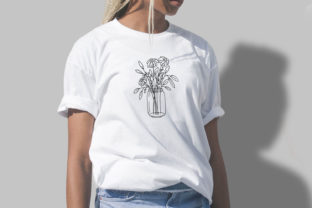
In the rapidly evolving landscape of digital design and print-on-demand commerce, the distinction between generic clip art and strategic visual assets has never been more critical. For professionals, entrepreneurs, and creators navigating the saturated market of personalized goods, success often hinges on versatility and technical precision. The Mason Jar Floral Arrangement featuring hand-drawn chamomile and greenery represents more than just a rustic aesthetic; it embodies a shift toward functional minimalism that serves both artistic expression and commercial viability. This specific design archetype—a transparent, single-layer line file—addresses the changing needs of modern production workflows while tapping into enduring consumer preferences for organic, authentic visuals.
Redefining Rustic: The Intersection of Aesthetics and Utility
The concept of the mason jar floral arrangement has transcended its origins as a simple farmhouse trope to become a staple in contemporary design portfolios. However, the current market demands more than intricate, multi-colored illustrations that are difficult to reproduce across various media. There is a growing preference for line-only aesthetics that prioritize clarity and adaptability. This hand-drawn design featuring chamomile flowers and lush greenery captures the essence of botanical illustration without the production complexities associated with full-color raster graphics.
For marketers and product developers, this shift is significant. The transparency and single-color nature of this design type allow for seamless integration across diverse product lines. Whether applied to a natural canvas tote bag, a dark navy t-shirt, or a minimalist greeting card, the line art maintains its integrity. This adaptability is crucial in an era where brand consistency across multiple touchpoints is paramount. The design does not compete with the substrate; rather, it enhances it, allowing the texture of the fabric or the quality of the paper to contribute to the final aesthetic. This symbiotic relationship between design and material is a hallmark of sophisticated product development.
Technical Precision in Digital Cutting Workflows
Beyond aesthetics, the technical specifications of this Mason Jar Floral Arrangement address specific pain points in the maker and manufacturing communities. The inclusion of SVG, PNG, EPS, JPG, and PDF formats ensures compatibility across the entire digital-to-physical spectrum, but the true value lies in the file architecture. Being a one-layer cutting file designed for single-color output fundamentally streamlines the production process.
Consider the workflow of a freelance designer or a small business owner utilizing vinyl cutters or laser engravers. Multi-layered files often require extensive weeding, registration alignment, and color separation, which increases labor time and material waste. A unified, single-layer vector file eliminates these friction points. It allows for rapid prototyping and efficient batch production. This technical efficiency directly correlates to profitability and scalability for creative entrepreneurs.
- Vector Scalability: The SVG and EPS formats ensure that the chamomile details remain crisp whether scaled down for a lapel pin or enlarged for storefront signage.
- Cutting Optimization: Single-layer architecture prevents overlapping cut lines, reducing machine runtime and preserving blade longevity.
- Substrate Versatility: The absence of background elements makes this file ideal for etching on glass, embroidery digitizing, and sublimation without requiring complex masking.
- Workflow Integration: Ready-to-use compatibility with industry-standard software like Adobe Illustrator, Cricut Design Space, and Silhouette Studio reduces pre-production setup time.
Aligning with Consumer Trends and Market Demands
The relevance of this specific floral arrangement extends beyond production logistics; it resonates with broader cultural and consumer shifts. We are currently witnessing a "return to tangible" movement in response to digital fatigue. Consumers are increasingly seeking products that evoke a sense of calm, nature, and handmade authenticity. Chamomile, specifically, carries semantic weight associated with wellness, relaxation, and herbal tradition. When rendered in a delicate, hand-drawn line style, it communicates these values instantly without relying on heavy-handed text or overt marketing messages.
Furthermore, the sustainability movement influences design choices. Single-color prints generally consume fewer resources and align better with eco-conscious branding strategies. A mason jar motif naturally complements sustainable packaging initiatives, zero-waste lifestyle brands, and organic product lines. For creators targeting the eco-aware demographic, this design serves as a visual shorthand for environmental responsibility. It signals an understanding of the audience's values through aesthetic choice rather than performative messaging.
This alignment with lifestyle trends explains why attention is shifting toward high-quality, versatile line art. In a marketplace flooded with AI-generated complexity, the intentionality of a hand-drawn, simplified form stands out. It suggests human craftsmanship and thoughtful curation, qualities that command higher perceived value in the artisanal and boutique sectors.
Practical Applications Across Business Verticals
The utility of this Mason Jar Floral Arrangement is best understood through its application across different business models. Its neutrality and elegance make it a chameleon asset for various industries:
- Wedding and Event Stationery: Planners and designers utilize this line art for save-the-dates, table numbers, and welcome signs. The single-color format allows for cost-effective printing on textured cardstock while maintaining an upscale, bespoke appearance.
- Apparel and Merchandise: POD sellers leverage the transparent PNG and scalable SVG to create gender-neutral, age-inclusive apparel. The design works equally well on youth tees and adult tunics, expanding the potential customer base without requiring multiple design variations.
- Home Decor and Signage: Makers use the cutting files to create wooden signs, acrylic door hangers, and window decals. The line-art style mimics the look of expensive hand-painting or laser etching, offering a premium finish at a lower production cost.
- Digital Content Creation: Bloggers and social media managers use the JPG and PNG versions as overlays for photography, watermarking, or digital planner stickers, ensuring visual cohesion between physical products and digital presence.
Future-Proofing Creative Assets
As technology advances, the demand for clean, structured data in design will only increase. While generative AI can produce infinite variations of floral imagery, it often struggles with the topological cleanliness required for physical fabrication. Files generated by algorithms frequently contain stray nodes, open paths, and unnecessary complexity that frustrates cutting machines and embroidery software. A professionally curated, hand-drawn, single-layer file represents a standard of quality that automated systems cannot yet reliably replicate.
Investing in or utilizing assets like this Mason Jar Floral Arrangement is a forward-looking strategy. It acknowledges that while trends in color and composition may cycle, the fundamental need for manufacturable, versatile, and emotionally resonant design remains constant. For the professional creator, building a library of such high-utility assets is akin to building infrastructure. It provides a reliable foundation upon which seasonal campaigns, new product launches, and client projects can be executed with speed and confidence.
Moreover, the licensing and usage rights associated with such files play a pivotal role in business security. Understanding that a file includes comprehensive formats (SVG, PNG, EPS, PDF) ensures that creators are not locked into a single ecosystem or vendor. This interoperability is essential for businesses that may need to pivot their production methods or expand into new markets. The ability to take the same chamomile mason jar design from a vinyl decal today to a silk-screened textile tomorrow without redrawing or tracing preserves intellectual property value and maximizes return on investment.
The Enduring Appeal of Functional Simplicity
Ultimately, the focus on this specific type of floral arrangement highlights a maturation in the creative economy. We are moving past the novelty phase of digital crafting into an era of professionalization. Success is no longer defined solely by who has the most colorful or complex design, but by who offers the most adaptable and technically sound solution. The hand-drawn mason jar with chamomile is a testament to the power of restraint. It proves that a single line, when drawn with intention and formatted with precision, can carry more commercial and aesthetic weight than a thousand pixels of noise.
For entrepreneurs, freelancers, and enthusiasts, embracing this level of functional simplicity is not a limitation; it is a liberation. It frees up cognitive and operational bandwidth to focus on storytelling, customer connection, and business growth. By utilizing designs that bridge the gap between artistic beauty and manufacturing reality, creators position themselves at the forefront of a market that values both form and function. In this context, the mason jar is not merely a vessel for flowers; it is a vessel for sustainable, scalable, and meaningful creative enterprise.