Floral Vector Pattern in Vintage Style: A Practical Guide to Quality and Usability
The enduring appeal of botanical illustration lies in its ability to evoke nostalgia while maintaining contemporary relevance. When designers and creators seek a Floral Vector Pattern in Vintage Style, they are usually looking for that specific intersection of organic imperfection and digital precision. Unlike raster images, which degrade when resized, vector art offers the freedom to scale infinitely without losing the delicate, hand-drawn characteristics that define the vintage aesthetic. However, acquiring these assets is only the first step. The true value emerges when you understand how to evaluate file integrity, manage technical specifications, and apply these patterns effectively across various media.
Many beginners and even seasoned professionals overlook critical details when selecting vintage floral vectors. The market is saturated with low-quality conversions disguised as original artwork, leading to frustration during production. Understanding what constitutes a high-quality vector asset—specifically one that includes hand-drawn leaves and authentic texturing—is essential for avoiding costly reprints or pixelated digital outputs. This guide focuses on practical corrections and better decision-making processes to ensure your creative projects maintain professional standards.
Distinguishing Authentic Hand-Drawn Vectors from Traced Imitations
A common mistake in sourcing vintage-style graphics is assuming all vector files possess genuine artistic merit. Many available patterns are simply auto-traced JPEGs converted into vector paths. While these may technically be scalable, they often lack the fluid line weight variation and intentional negative space found in true hand-drawn illustrations. Auto-traced files frequently contain thousands of unnecessary anchor points, making them sluggish to edit and visually stiff upon close inspection.
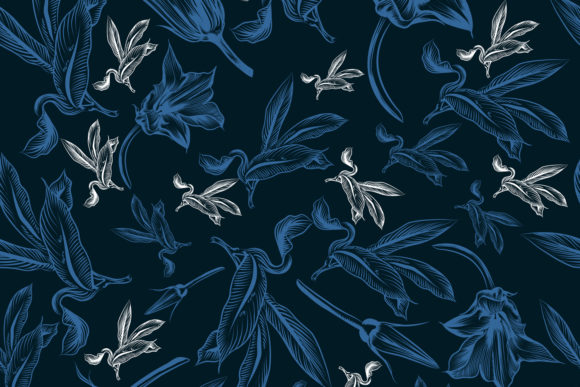
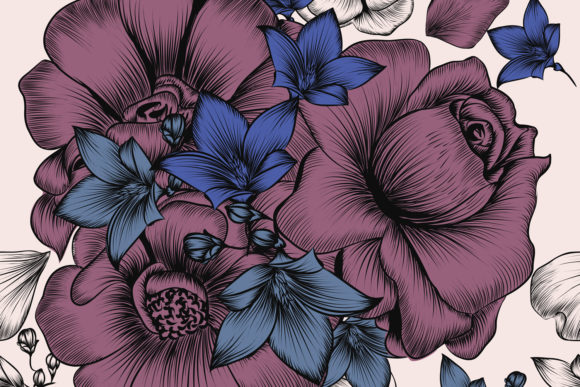
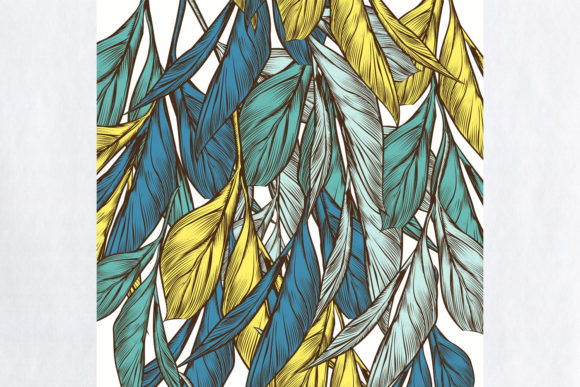
To avoid this pitfall, examine the preview image critically before downloading or purchasing. Authentic hand-drawn leaves should display tapered strokes and natural irregularities. If the edges look jagged or overly geometric, the file was likely machine-generated. High-quality assets, such as those containing 100 unique vector art elements, are typically created directly in software like Adobe Illustrator or Procreate with vector brushes. These retain the soul of traditional ink drawing while providing the mathematical benefits of vector formats. Always prioritize assets where the description explicitly confirms manual creation rather than automated conversion.
Verifying File Compatibility and Version Standards
Technical incompatibility remains a significant source of workflow disruption. A frequent oversight involves ignoring software version requirements. You might encounter an AI CS2 file and assume it is obsolete, but in the vector world, older versions are often preferable for compatibility. An AI CS2 file ensures that the artwork opens correctly in virtually any version of Adobe Illustrator released over the last two decades, preserving layer structures and editable paths. Conversely, newer files may lock out users with older software licenses.
Similarly, the inclusion of an EPS10 file serves as a universal safety net. EPS10 is widely supported across CorelDRAW, Affinity Designer, and open-source alternatives like Inkscape. Neglecting to check for this format can leave non-Adobe users unable to modify colors or rearrange pattern elements. Before committing to a download, verify that the package includes both formats. This dual-format approach safeguards your investment against future software changes and ensures collaborative teams using different tools can access the same high-quality assets.
The Critical Role of High-Resolution Previews
While vectors are resolution-independent, the preview image is not. A surprising number of creators make purchasing decisions based on tiny, watermarked thumbnails that hide defects. When evaluating a Floral Vector Pattern in Vintage Style, insist on a substantial preview file. A standard requirement should be a JPEG preview at 5000x5000 px. This resolution allows you to zoom in and inspect the quality of the hand-drawn leaves and floral details at actual print size.
Without a high-resolution reference, you cannot accurately judge texture density or color harmony. Low-res previews often mask poor node placement or muddy color separations that become glaringly obvious when printed on fabric or packaging. Use the 5000px JPEG as a proofing tool. Print a test section at home or view it on a calibrated monitor to confirm the vintage distress effects are intentional design choices rather than compression artifacts. This verification step prevents the disappointment of realizing a pattern looks messy or amateurish only after integrating it into a final layout.
Strategic Application Across Print and Digital Media
Possessing a scalable vector does not automatically guarantee successful application. A misunderstanding of color modes and scaling ratios often undermines the vintage aesthetic. Vintage styles rely heavily on subtle textures and muted palettes that behave differently in RGB versus CMYK. If you are designing for web, the infinite scaling of vectors is perfect for responsive backgrounds. However, for print applications like wedding stationery or textile design, you must convert spot colors or complex gradients appropriately to avoid banding or color shifts.
Furthermore, consider the density of the pattern relative to the end product. A dense arrangement of 100 vector art elements might look stunning on a large poster but could become visual noise on a business card or mobile app icon. Test the pattern at multiple scales before finalizing your design. Because these are vectors, you can easily isolate individual hand-drawn leaves or flowers to create custom compositions. Avoid the lazy approach of tiling the entire pattern uniformly; instead, leverage the modularity of the vector file to create bespoke layouts that respect the whitespace and balance inherent in vintage design.
Evaluating Value Beyond the Price Tag
When assessing cost-effectiveness, look beyond the initial price and consider licensing terms and editability. A cheaper raster alternative might seem attractive initially, but if you need to change the background color or resize the artwork for a billboard later, you will incur additional costs or quality loss. True vector assets represent a long-term resource. Check whether the license permits commercial use, modification, and resale of derivative works. For entrepreneurs and small business owners, securing full commercial rights upfront prevents legal complications down the road.
Also, evaluate the organization of the file itself. Well-structured vector files have named layers, grouped elements, and cleaned-up artboards. Disorganized files with hundreds of unnamed paths waste hours of production time. A quality Floral Vector Pattern in Vintage Style collection should be curated for efficiency. If the provider offers a structured hierarchy where flowers, leaves, and accents are separated, the higher price point is usually justified by the time saved during customization. Efficiency in asset management directly correlates to project profitability and reduced stress.
Maintaining the Integrity of Vintage Aesthetics
Finally, resist the urge to over-modernize vintage assets. A common error is applying neon colors or glossy effects to hand-drawn botanical illustrations, which clashes with their intrinsic character. The charm of these patterns lies in their historical resonance. When customizing, stick to period-appropriate color palettes or modern interpretations that honor the original line work. Use the vector’s scalability to enhance detail, not to distort it.
If you plan to mix these vintage vectors with other design elements, ensure stylistic consistency. Pairing delicate, hand-drawn florals with harsh, geometric sans-serif typography can create visual discord unless handled with extreme care. Test combinations early in the process. Remember that the goal of using a Floral Vector Pattern in Vintage Style is to add warmth and craftsmanship to your work. By respecting the source material and adhering to technical best practices, you ensure that the final result feels authentic, professional, and timeless rather than dated or disjointed.