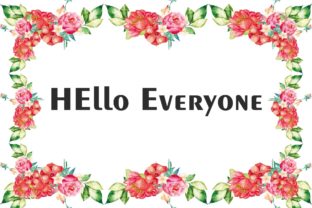
Strategic Integration of Floral Background and Frame Assets in Digital and Print Media
The visual language of design relies heavily on context. While typography and focal imagery carry the primary message, the peripheral elements often dictate the emotional reception of that message. Among these supporting elements, the floral background and frame occupies a unique position in modern media production. Far from being merely decorative relics of vintage stationery, these assets have evolved into sophisticated tools for branding, user experience design, and educational engagement. Understanding the technical distinctions between PNG and JPG formats, alongside the psychological impact of botanical motifs, allows professionals across industries to leverage these assets with precision rather than defaulting to generic ornamentation.
Technical Selection: Navigating PNG Versus JPG for Botanical Assets
The efficacy of a floral background and frame depends entirely on technical execution. A common failure point in both professional and amateur design is the mismatch between file format and intended application. The choice between PNG and JPG is not arbitrary; it is a functional decision based on compression algorithms, transparency requirements, and end-use resolution.
Transparency and Layering with PNG
Portable Network Graphics (PNG) files are indispensable when working with floral frames. Unlike raster formats that force a rectangular bounding box, PNG supports alpha channel transparency. This characteristic is critical for frames where the negative space must reveal underlying content. When a designer overlays a floral border onto a photograph or a colored document background, a PNG ensures that only the petals, leaves, and stems are visible. There is no white box obscuring the composition. Furthermore, PNG utilizes lossless compression. Every pixel of the botanical illustration remains intact regardless of how many times the file is saved or edited. For high-stakes print projects or digital interfaces requiring crisp edges against varying backgrounds, PNG is the non-negotiable standard.
Efficiency and Texture with JPG
JPEG (JPG) files serve a different purpose within the floral asset ecosystem. As a lossy compression format, JPG excels at handling complex color gradients and photographic textures. If the floral background is a full-bleed photograph of a meadow or a watercolor wash rather than a vector-style illustration, JPG often provides a superior balance of quality and file size. Web performance metrics demand lightweight assets; a 4MB PNG background can devastate page load speeds, whereas an optimized JPG might deliver comparable visual fidelity at 300KB. However, designers must accept that JPG does not support transparency. These files are best reserved for base layers, full-page backgrounds, or scenarios where the floral element serves as a texture map rather than a distinct overlay.
Psychological Framing and Audience Reception
The selection of a specific floral aesthetic is a semantic choice that communicates before the viewer reads a single word. Different audiences respond to botanical cues in predictable ways, making the floral background and frame a strategic variable in communication design.
- Trust and Tradition: Dense, symmetrical Victorian-style frames signal heritage, stability, and formality. Legal firms, wedding vendors, and luxury hospitality brands utilize these motifs to establish authority and timelessness.
- Growth and Innovation: Minimalist line-art florals or abstract botanical shapes suggest organic growth without rigidity. Tech startups focused on sustainability, wellness apps, and educational platforms often prefer this lighter touch to avoid appearing dated.
- Warmth and Accessibility: Hand-drawn, watercolor floral backgrounds reduce cognitive friction. They soften institutional messaging, making healthcare communications, school newsletters, and community outreach materials feel more personal and less bureaucratic.
Educators and researchers should note that while floral elements enhance aesthetic appeal, they also influence cognitive load. A high-contrast, busy floral background can impede reading comprehension. Effective implementation requires treating the floral element as a container for whitespace rather than a competitor for attention. The frame should guide the eye toward the center, not distract from the core data or text.
Sector-Specific Applications and Workflows
The utility of floral assets extends well beyond greeting cards. Diverse sectors have integrated these visuals into functional workflows to solve specific communication challenges.
Corporate Branding and Event Marketing
In corporate environments, floral backgrounds act as brand anchors. Companies with organic or feminine-coded brand identities use consistent floral motifs across slide decks, social media templates, and annual reports to create visual cohesion. For event marketing, particularly weddings and galas, the floral frame serves as a thematic preview. Digital invitations featuring the same botanical species used in the physical venue decor bridge the gap between digital notification and physical experience. Using high-resolution PNG assets ensures that these digital previews match the print quality of the actual event signage.
Educational Materials and E-Learning
Instructional designers frequently employ floral borders to segment information. In textbooks and e-learning modules, a subtle floral header can denote a new chapter or a shift in topic without the harshness of a solid line. Research in multimedia learning suggests that aesthetically pleasing environments can improve learner persistence. However, accessibility remains paramount. Educators must ensure sufficient contrast ratios between text and the floral background. A dark green leaf pattern may look elegant but can render white text illegible for users with visual impairments. Always test floral assets against WCAG guidelines, potentially applying a semi-transparent solid overlay to guarantee readability.
E-Commerce and Product Photography
For small business owners and creators, floral backgrounds provide a cost-effective alternative to professional set design. Flat-lay photography of jewelry, cosmetics, or artisanal goods often utilizes floral PNG overlays to add depth and context to studio shots taken on plain surfaces. This technique allows sellers to seasonally update their product listings without reshooting inventory. A summer collection can feature sunflowers, while the same product photographed in autumn can be framed with dried eucalyptus, all achieved through digital compositing. The key here is lighting consistency; the shadow direction in the floral PNG must match the lighting of the product photo to maintain realism.
Optimizing Assets for Cross-Platform Consistency
A significant challenge in using floral backgrounds and frames is maintaining visual integrity across different output mediums. An asset that looks vibrant on a backlit monitor may appear muddy in CMYK print, or conversely, a print-optimized file may be too heavy for web deployment.
Color Space Management
Digital floral assets are typically created in RGB color space, which offers a wider gamut of bright greens and neon pinks. Printers operate in CMYK. When preparing a floral frame for physical collateral like business cards or packaging, designers must convert the file and adjust colors manually. Automated conversion often desaturates botanical greens and shifts reds toward brown. Professional workflows involve soft-proofing the PNG or JPG in the target CMYK profile before finalizing the design. This proactive step prevents the disappointment of receiving printed materials where the lush floral border appears dull and lifeless.
Resolution and Scaling Strategies
Scalability is another critical consideration. Raster-based floral PNGs have a fixed resolution. Enlarging a 72 DPI web asset for a banner will result in pixelation. Best practice dictates sourcing or creating floral assets at the maximum anticipated print size (typically 300 DPI). For web use, these master files should be downsampled and compressed. Modern responsive design workflows often utilize multiple versions of the same floral background: a lightweight JPG for mobile viewports and a higher-quality version for desktop displays. This adaptive approach ensures that the floral aesthetic enhances rather than hinders the user experience across devices.
Ethical Sourcing and Licensing Considerations
As the demand for floral backgrounds and frames grows, so does the importance of ethical asset acquisition. The internet is saturated with scraped botanical illustrations, but using unlicensed work exposes businesses and creators to legal risk. Professionals must verify licensing terms, distinguishing between personal use, commercial use, and extended commercial licenses. Many high-quality floral PNG packs are created by independent artists who rely on proper licensing for income. Supporting these creators not only mitigates legal exposure but also encourages the continued production of unique, high-quality assets.
Furthermore, cultural sensitivity plays a role in floral selection. Certain flowers carry specific meanings in different cultures; lilies may signify mourning in some contexts and purity in others. A global brand using a floral frame indiscriminately risks unintended messaging. Thorough research into the cultural semiotics of specific botanical species ensures that the chosen floral background aligns with the intended message across all target demographics. This level of diligence transforms a simple decorative choice into a demonstration of cultural competence and brand awareness.
Future Trends in Botanical Design Assets
The evolution of floral backgrounds and frames continues to track with broader design trends. We are currently observing a shift away from hyper-realistic 3D renders toward organic imperfection. Risograph textures, scanned pressed flowers, and charcoal sketches are gaining traction as audiences seek authenticity in digital spaces. These textured assets often work better as JPGs due to their grain and noise, challenging the dominance of clean-edged PNGs. Additionally, AI-generated botanical patterns are entering the workflow, offering customizable floral frames that can be tailored to exact color palettes and compositions. While useful, these tools require human curation to avoid anatomical impossibilities that can unsettle viewers familiar with botany. The future of floral design assets lies in this hybrid approach: leveraging technology for efficiency while retaining the organic irregularity that makes botanical imagery resonant in the first place.