Floral Pocket Wedding Invitation: Crafting Elegant Stationery with Digital Vector Files
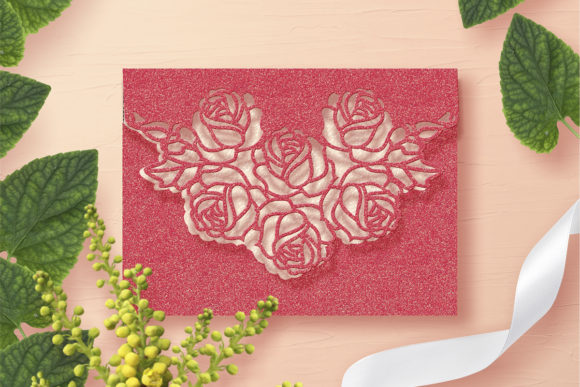
A Floral Pocket Wedding Invitation represents a sophisticated intersection of traditional paper crafting and modern digital fabrication. Unlike standard flat cards, this design features an intricate, laser-cut or blade-cut overlay that creates a dimensional "pocket" or frame on the invitation's surface. This pocket typically holds an RSVP card, a details insert, or a sprig of dried flowers, securing them in place through precise friction-fit engineering rather than glue. When utilizing vector files for Cricut, Silhouette Studio, or commercial laser cutters, this stationery style transforms from a simple announcement into a tactile experience that sets the tone for the entire event.
Elevating the Guest Experience Through Tactile Design
The primary value of a floral pocket design lies in its ability to organize information while creating a moment of interaction. In real-world wedding planning, couples often struggle with loose enclosures that fall out of envelopes or get separated during transit. The integrated pocket solves this logistical headache elegantly. For a garden wedding or botanical-themed celebration, the floral motif acts as immediate visual signaling. Guests understand the aesthetic before they even read the text. The physical act of sliding the response card out of the floral die-cut engages the sense of touch, making the invitation feel substantial and intentional. This level of detail is particularly beneficial for formal events where the stationery serves as the first tangible representation of the couple’s vision.
Versatility Across Creative Industries and Side Hustles
While brides and grooms are the most obvious beneficiaries, the utility of resizable Floral Pocket Wedding Invitation vectors extends far beyond personal use. Small business owners in the stationery industry frequently utilize these digital assets to expand their product catalogs without investing hundreds of hours in original illustration. A local print shop or Etsy seller can purchase a single ZIP file containing EPS, SVG, PDF, DXF, and PNG formats and immediately offer a premium tier of wedding stationery. Because the files are completely re-sizable, a designer can adapt the same floral pocket artwork for a 5x7 invitation, a smaller thank-you card, or even a large-format welcome sign for the reception venue. This scalability allows for cohesive branding across multiple touchpoints using a single design asset.
Event planners also find immense practical value in these vector files. When coordinating a styled shoot for portfolio building or vendor collaboration, having access to customizable laser-cut templates allows planners to create bespoke props quickly. If a photographer needs a specific color palette or size to match a backdrop, the vector file can be adjusted in minutes and sent to a fabrication partner. This agility is impossible with pre-made, fixed-size physical products. The digital download format ensures that creative professionals are never bottlenecked by shipping times when a last-minute design adjustment is required.
Technical Considerations for Plotter and Laser Cutting
Successfully executing a Floral Pocket Wedding Invitation requires understanding the relationship between digital design and physical material. The included vector formats serve distinct purposes depending on your equipment. SVG and DXF files are generally optimized for blade cutting machines like Cricut Maker or Silhouette Cameo. These formats rely on line weight and path continuity to guide the blade. Conversely, EPS and PDF vectors are often preferred for laser cutting systems like Glowforge or xTool, as they maintain geometric precision at high resolutions. Before committing to a full production run, it is essential to perform test cuts. Cardstock density varies significantly; a pocket that fits perfectly on 65lb paper may be too tight on 80lb linen stock or too loose on textured cotton paper.
The "completely re-sizable" nature of these files is a major advantage, but it demands responsible handling. When scaling a floral pocket design up or down, users must consider the structural integrity of the delicate floral elements. Enlarging a design for a large format display might require thickening the stroke width of the petals to prevent breakage during handling. Conversely, shrinking the design for a place card might necessitate simplifying intricate interior details that a blade cannot physically navigate at small scales. Always check the minimum kerf or blade clearance after resizing to ensure the pocket mechanism remains functional.
Navigating Color Expectations and Material Choices
A common point of confusion for first-time users of digital vector downloads is color representation. It is crucial to remember that colors shown in product photos are examples only. Vector files define shapes and paths, not inherent ink colors. When you open an SVG in Cricut Design Space or Illustrator, the fill colors are merely placeholders. This is actually a strength rather than a limitation. It grants total creative freedom to match specific Pantone swatches or dye lots. For laser cutting, the color in the file is irrelevant entirely; the machine reads only the vector lines. For print-and-cut workflows, the separate PNG file included in the download can serve as a reference for alignment or as a background texture if the user prefers a printed floral effect behind a simpler cut line.
Material selection dictates the final success of the floral pocket mechanism. While standard cardstock works for basic applications, specialty papers elevate the design. Pearlized metallics catch light in the recessed areas of the laser cut, adding depth. Vellum overlays can soften the contrast between the pocket and the base card. However, highly fibrous papers like handmade cotton rag can sometimes result in fuzzy edges on intricate floral cuts. Users should select materials with tight fibers for the cleanest results. Testing different paper grains is just as important as testing cut settings, as the grain direction can affect how easily the pocket opens and closes without creasing.
Customization Strategies for Unique Wedding Themes
The true power of owning the vector source file is the ability to modify the design to fit niche themes. A standard floral pocket might feature generic roses, but a couple getting married in a desert location could swap those paths for agave or succulents within the same structural framework. Because the file includes editable formats like EPS and SVG, users with basic vector software knowledge can delete specific flower elements and replace them with motifs that hold personal significance. This hybrid approach saves time on structural engineering—which is the hardest part of pocket design—while allowing for artistic personalization.
For destination weddings, the pocket functionality can be repurposed to hold practical items beyond RSVP cards. Imagine a floral pocket holding a custom luggage tag, a map of the resort, or a voucher for a welcome drink. The resizable vector files make this adaptation seamless. By adjusting the dimensions of the pocket opening, the same beautiful floral exterior can accommodate vastly different inserts. This flexibility makes the Floral Pocket Wedding Invitation vector pack a long-term resource rather than a single-use purchase. Crafters who specialize in quinceañeras, corporate galas, or anniversary parties can similarly adapt the floral aesthetic to suit different demographics and formality levels simply by changing the scale and the insert content.
Practical Workflow for Digital Downloads
Managing the digital assets efficiently ensures a smooth production process. Upon downloading the ZIP file, organize the contents by project rather than keeping them in a generic "downloads" folder. Rename files to include the intended size and material type, such as "FloralPocket_5x7_LinenCardstock.svg." This prevents version control issues when iterating on designs. Keep the original master files untouched and always work on copies. When preparing files for a professional laser cutting service, ask about their preferred format and line color coding. Some services require cut lines to be red and engrave lines to be black; others use specific layer names. Having the multi-format bundle (EPS, SVG, PDF, DXF, PNG) means you can provide exactly what the vendor needs without costly conversion errors.
Ultimately, the Floral Pocket Wedding Invitation vector collection bridges the gap between high-end bespoke stationery and accessible DIY creation. Whether used by a bride seeking a hands-on project, a stationer expanding their luxury line, or an event designer needing rapid prototyping tools, these files provide the structural foundation for elegance. The key to success lies in respecting the technical requirements of the cutting equipment, understanding the distinction between digital preview colors and physical output, and leveraging the resizability to solve specific organizational and aesthetic challenges. By treating the vector file as a flexible blueprint rather than a static image, creators can produce invitation suites that are as functional as they are beautiful.